



Proper Care and Maintenance of Laminate Flooring
Laminate flooring is designed to be durable, attractive, and easy to live with, but it does require the correct care routine to maintain its appearance and performance over time. Using the wrong cleaning products or methods can permanently damage the surface and edges of the boards, which is why following manufacturer-approved maintenance guidelines is essential.
Dry cleaning should form the foundation of your regular maintenance routine. A dust mop or vacuum cleaner fitted with a soft bristle brush is recommended to remove dust, grit, and debris that can cause surface wear. Hard bristles or rotating brushes should be avoided, as they may scratch or dull the finish of the floor over time.
For light cleaning when dry methods are not sufficient, slightly damp maintenance may be used with care. A laminate-specific cleaner should be sprayed lightly onto a duster rather than directly onto the floor. The surface must be wiped dry immediately, ensuring no moisture remains visible. Excess moisture can seep into joints and edges, leading to swelling or long-term damage. For laminate products with bevelled edges, dry cleaning only is strongly recommended.
Wet cleaning methods are strictly prohibited. Steam mops, spray mops, power cleaners, and any type of mechanical cleaning equipment can force moisture into the flooring and compromise its structure. Similarly, cleaning products containing abrasives, waxes, ammonia, silicone, soaps, oils, polishes, or shine enhancers must never be used. These substances can leave residue, dull the surface, or cause irreversible damage.
Spills should always be wiped up immediately to prevent moisture penetration. Stubborn marks can be removed carefully using a small amount of acetone-based nail polish remover applied to a cloth. Scouring pads or abrasive cleaners must never be used. Laminate flooring is also unsuitable for damp environments such as saunas, where moisture levels exceed normal residential conditions.
Protecting Your Floor From Wear and Damage
Preventative care plays a major role in extending the life of laminate flooring. In high-traffic areas, the use of rugs or runners helps reduce surface wear while also enhancing the overall appearance of the space. Non-slip rugs are particularly useful at pivot points such as stair landings or entryways, where foot traffic is concentrated.
Furniture movement is another common cause of damage. Felt pads or similar protective glides should be fixed to the legs of chairs, tables, and other movable furniture. Furniture should always be lifted into place rather than dragged across the floor. When sliding is unavoidable, a carpet offcut placed underneath can help prevent scratching.
For furniture fitted with casters or wheels, soft rubber wheels designed specifically for laminate floors are essential. Protective mats should also be used under office chairs or frequently moved items. These simple measures significantly reduce the risk of dents, scratches, and localised wear.
Exposure to direct sunlight can cause gradual colour changes in laminate flooring. While this is a natural process, the use of curtains, blinds, or UV-filtering window treatments can help minimise uneven fading across the room.
Inspection and Responsibility Before Installation
Before installation begins, laminate flooring panels must be thoroughly inspected under adequate lighting. Any product showing visible defects should never be installed. Defects must be reported prior to installation and within 30 days of purchase. Once installation has commenced, the flooring is considered accepted, and claims may no longer be valid.
It is the responsibility of the owner or installer to ensure all conditions are suitable before installation. This includes confirming that a moisture barrier is installed beneath the flooring, as this is now a requirement for all installations. Careful pre-installation checks help avoid costly issues later.
Preparing the Space for Installation
Proper preparation is critical to a successful laminate flooring installation. Closed packages should be stored horizontally in the installation room for at least 48 hours prior to laying. This allows the flooring to acclimate to the room’s temperature and humidity conditions, reducing the risk of movement after installation.
Door and frame clearances should be checked in advance, with door mouldings trimmed as needed so planks can slide neatly underneath. Existing skirting boards should be removed carefully and refitted later without pinning the floor, allowing space for natural expansion and contraction.
Subfloor preparation is equally important. The surface must be flat and even before installation begins. Sanding or levelling compounds may be required to achieve the necessary tolerance. Safety glasses and gloves should always be worn during preparation and installation work.
Installation Principles and Best Practices
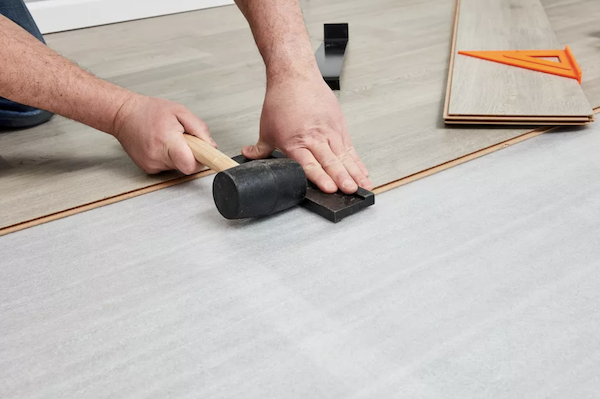
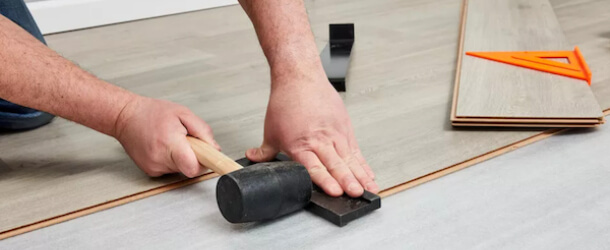
Laminate flooring must always be installed as a floating floor. It should never be attached to the subfloor or fixed objects. Because the product is primarily made of wood-based materials, it naturally expands and contracts with changes in temperature and humidity. An expansion gap must be maintained around the entire perimeter of the room and around all fixed obstacles.
Planks are installed by angling them approximately 20 to 30 degrees into the adjoining board and applying gentle forward pressure until they click into place. Mixing planks from multiple cartons during installation helps achieve a more natural and balanced appearance, avoiding clusters of similar tones.
Expansion joints are required in larger spaces, with joints placed every 6 metres across the width of the planks and every 10 metres along their length. Expansion joints should also be used between rooms and can be finished with mouldings attached to the subfloor rather than the flooring itself.
Planning for Long-Term Care and Repairs
Purchasing a small number of extra cartons at the time of purchase is strongly recommended. Spare boards are invaluable if damage occurs, measurements were miscalculated, or future repairs are required. Having matching material available also ensures consistency if the product is discontinued later.
One of the advantages of laminate flooring is that individual planks can often be removed and replaced without lifting the entire floor, provided the correct expansion gaps were maintained during installation. This makes future repairs simpler and more cost-effective when planned correctly from the outset.
With the right care, preparation, and installation approach, laminate flooring can provide a reliable, attractive surface that performs well for many years. Following these guidelines helps protect your investment and ensures your floor continues to look and function as intended.
